

Passports
We have available genuine passports online. The best quality biometric RFID-chip passports for sale from Canada, Ireland, Lithuania and New Zealand. Easy relocation permanently to the United States, Canada, the European Union, U.K. and Australia with just a flight ticket.
With these required biometric information;
- Surname :
- Given names :
- Sex :
- Height :
- Address :
- Eye Color :
- Hair Color :
- Nationality :
- ID card Scan Copy :
- Fingerprint Scan (Place your finger upon a blue ink pad, then place same finger on a white sheet of paper, then scan and send) :
- Date of Birth (As on your birth Certificate) :
- Place of Birth (As on your birth Certificate) :
- Your signature (Signature must be on white paper) :
- Your Passport-size Photo (a high-resolution digital facial image on a white background) :
We can produce and issue you a passport within 3 days and ship globally with another 3 to 5 days via USPS Priority Mail, FedEx, Canada Post, Deutsche Post DHL.
Passports are among the most secure identity documents in the world, designed according to international standards set by the International Civil Aviation Organization (ICAO) in Document 9303. We mimic these security features and produce authentic passports with exceptional quality.
Most of our passports issued are e-passports (also called biometric or electronic passports). They contain a tiny RFID chip (usually embedded in the cover or data page) protected by a metallic mesh or shielding.
- The chip stores the holder’s biographical data (name, date of birth, passport number, expiry date, nationality) plus a high-resolution digital facial image.
- Many countries also store additional biometrics such as fingerprints or (in some cases) iris data.
- Security mechanisms include:
- Basic Access Control (BAC) or Extended Access Control (EAC) — requires the Machine Readable Zone (MRZ) to be scanned first to unlock the chip.
- Passive Authentication (PA) — digital signatures verify that the data hasn’t been tampered with.
- Active Authentication (AA) — prevents cloning of the chip.
This allows border systems to quickly and securely match the physical document against the electronic data.
- Facial image — stored digitally on the chip and matched against the printed photo (and live facial recognition at borders).
- Fingerprints (in many countries) — used for additional verification.
- These biometrics enable automated border control systems (e.g., e-gates) and help confirm the document belongs to the presenter.
The bottom of the data page contains two or three lines of text in a standardized format (OCR-B font). It includes key details encoded for quick machine reading. Any alteration to the printed data will mismatch the chip or MRZ checksums.
- Holograms and optically variable devices (OVDs) — shimmering images or patterns that change appearance when tilted or viewed from different angles. These are extremely difficult to replicate accurately.
- Color-shifting (optically variable) ink — text or images that change color depending on the viewing angle (e.g., gold to green).
- Guilloche patterns — intricate, fine-line backgrounds that are hard to scan or photocopy without distortion.
- Microprinting — tiny text (often smaller than 0.2 mm) that appears as a solid line to the naked eye but is readable under magnification. Photocopies blur it.
- Watermarks — translucent images or patterns visible when held up to light.
- Security threads or fibers — embedded colored or metallic threads visible under normal or UV light.
- Ultraviolet (UV) fluorescent ink — invisible under normal light but glows in specific colors/patterns under UV lamps. Complex designs are common.
- Infrared (IR) inks — absorb or reflect IR light in predictable ways.
- Reactive or thermochromic inks — change or disappear when exposed to heat or chemicals (indicating tampering).
- Latent images — patterns visible only at certain angles or under specific lighting.
- Polycarbonate data page (used in many modern passports, including newer U.S. versions) — a durable, tamper-evident plastic layer where personal data is laser-engraved (burned into the material). Attempts to alter it cause visible damage or clouding.
- Secure laminates — heat-sealed overlays with additional security features that show tampering if removed.
- Intaglio printing — raised ink (feels tactile) used for portraits or text.
- Laser perforation — tiny holes forming the passport number or patterns that are difficult to fake.
- Unique sewing or binding — for booklets, with UV-fluorescent thread or special stitching patterns to detect page substitution.
- Unique design elements on every page, deliberate micro-errors, or front-to-back register features that must align perfectly.
- Public Key Infrastructure (PKI) — countries maintain digital certificate systems so border readers can verify the chip’s digital signature against the issuing authority.
- Tamper-evident materials — any attempt to open, alter, or substitute pages leaves visible traces.
- Production is strictly controlled with audit trails, secure transport of blanks, and vetting of staff.
Combined, these layers create defense-in-depth: a forger would need to defeat multiple independent features simultaneously (optical, material, electronic, and biometric). Border officers use a combination of visual inspection, UV/IR lights, magnification, and electronic readers to verify authenticity quickly.
This information is based on publicly available ICAO standards and general descriptions of modern passport technology.
Showing all 4 results
-
 Passports
Canadian Passport
-
 Passports
Irish Passport
-
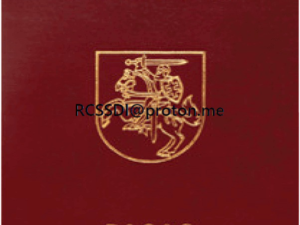 Passports
Lithuanian Passport
-
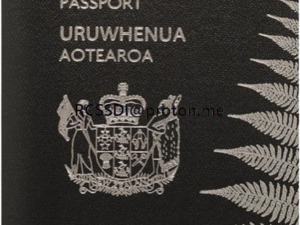 Passports
New Zealand Passport