
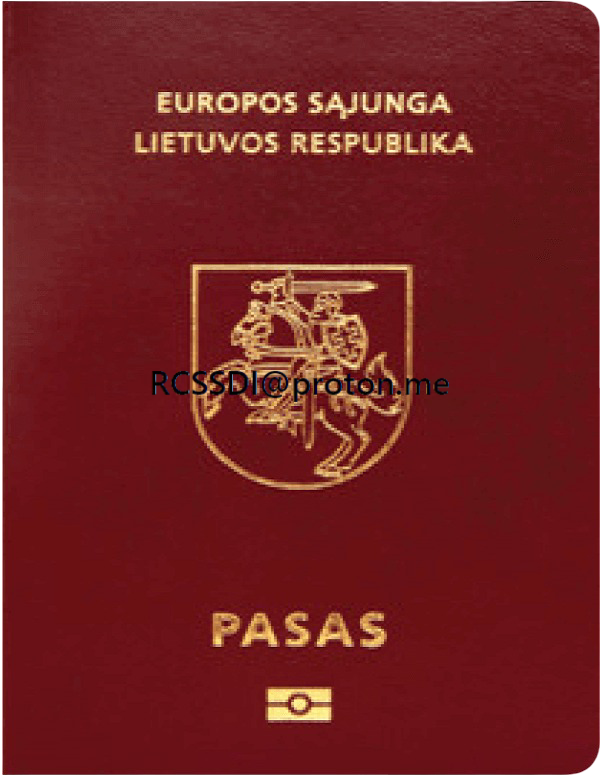
Lithuanian Passport and Its Security Features: Providing New Identity and International Travel
Modern Lithuanian passport online are issued as biometric ePassports. This means they contain an embedded electronic chip located within the passport cover.
The chip securely stores key information about the passport holder, including the person’s name, date of birth, nationality, passport number, and a digital version of the passport photograph.
When the passport is scanned at immigration checkpoints, electronic readers can access the chip and verify that the stored data matches the printed information on the identity page.
The information on the chip is protected by encryption and digital signatures, which makes it extremely difficult to copy or alter. Biometric technology improves both passport security and the speed of identity verification at international borders.
Polycarbonate Identity Page
One of the most important security improvements in modern Lithuanian passport online is the polycarbonate identity page.
Polycarbonate is a durable plastic material that allows personal information to be permanently laser engraved into the layers of the page rather than printed on the surface.
The identity page includes important details such as the passport holder’s name, photograph, date of birth, passport number, and nationality.
Because the information is embedded within the material, attempts to modify the page would cause visible damage. This makes it very difficult for criminals to replace the photograph or alter personal details.
Laser Engraving and Ghost Image Technology
Lithuanian passport online use laser engraving technology to add the passport holder’s photograph and personal data to the polycarbonate page.
Laser engraving works by etching the information directly into the material layer by layer. The result is a permanent and highly detailed image that cannot be easily removed or altered.
In addition to the main photograph, the passport identity page includes smaller secondary images of the holder’s photo, commonly known as ghost images. These additional images provide another level of visual verification for immigration officers.
Multiple images make it significantly harder for counterfeiters to replace the photograph without detection.
Ultraviolet (UV) Security Features
Many pages inside the Lithuanian passport contain designs that only appear when viewed under ultraviolet (UV) light.
Under normal lighting, these designs remain invisible. However, when exposed to UV light, hidden patterns, symbols, and artwork become visible across the passport pages.
These images may include elements representing Lithuania’s culture, national symbols, and historic landmarks.
UV features use specialized inks that are extremely difficult to reproduce with standard printing equipment, making them a reliable tool for detecting counterfeit passports.
Microprinting for Anti-Counterfeiting Protection
Another important security element used in Lithuanian passports is microprinting.
Microprinting consists of extremely small text printed in specific areas of the passport. To the naked eye, this text may appear as a simple line or pattern. When magnified, however, the tiny lettering becomes readable.
Because microprinting requires high-precision printing technology, it is very difficult for counterfeiters to reproduce accurately. Fake documents often display blurred or distorted microtext when examined closely.
Border officials can use magnification tools to check these details and confirm whether a passport is genuine.
Holographic Security Elements
Lithuanian passports also incorporate holographic images and optical security elements designed to prevent forgery.
These holograms create visual effects that change when the passport is tilted or viewed from different angles. The designs may include reflective patterns, color shifts, and layered imagery.
Holographic security elements are widely used in high-security documents because they require specialized manufacturing equipment to produce. Their dynamic appearance helps immigration officers quickly identify authentic passports.
Machine-Readable Zone (MRZ)
The Machine-Readable Zone (MRZ) is located at the bottom of the passport identity page. This section contains two lines of coded characters that represent important passport information.
The MRZ stores data such as the passport number, nationality code, date of birth, and expiration date.
Border control systems can scan this zone instantly to retrieve the information and compare it with the biometric chip and printed details.
If the scanned data does not match the information stored in the chip or printed on the passport, authorities may detect possible fraud or tampering.
Security Paper and Special Inks
The pages of the Lithuanian passport are printed on specially designed security paper that contains protective features to prevent copying or reproduction.
These materials may include watermarks, anti-copy background patterns, specialized inks, and tactile printing textures.
These security elements make it extremely difficult to create convincing counterfeit passports using standard printing equipment.
Continuous Improvements to Passport Design
To remain effective against modern counterfeiting techniques, Lithuania periodically updates the design and technology used in its passports.
Newer passport versions may include enhanced encryption for biometric chips, more complex UV artwork, stronger polycarbonate materials, and improved printing technologies.
By regularly upgrading passport security features, Lithuanian authorities ensure that their travel documents remain reliable and internationally trusted.
Global Recognition of the Lithuanian Passport
Because of its strong security features and strict identity verification process during issuance, the Lithuanian passport is widely recognized around the world.
As a member of the European Union, Lithuanian citizens benefit from freedom of movement within EU and Schengen countries, as well as visa-free or visa-on-arrival access to many destinations worldwide.
The advanced security design of the passport helps maintain international trust in Lithuania’s travel documents.
The Lithuanian passport is a modern and highly secure travel document designed to protect identity and ensure safe international travel. By combining technologies such as biometric chips, polycarbonate identity pages, laser engraving, holographic images, ultraviolet security designs, and microprinting, Lithuania has created a passport that is extremely difficult to forge or manipulate.
These security measures help prevent fraud, support efficient border control systems, and allow Lithuanian citizens to travel globally with confidence.
As technology continues to evolve, Lithuania will likely continue improving its passport design to maintain strong protection against emerging counterfeiting threats while preserving the reliability of one of its most important identity documents.
Reviews
There are no reviews yet.