
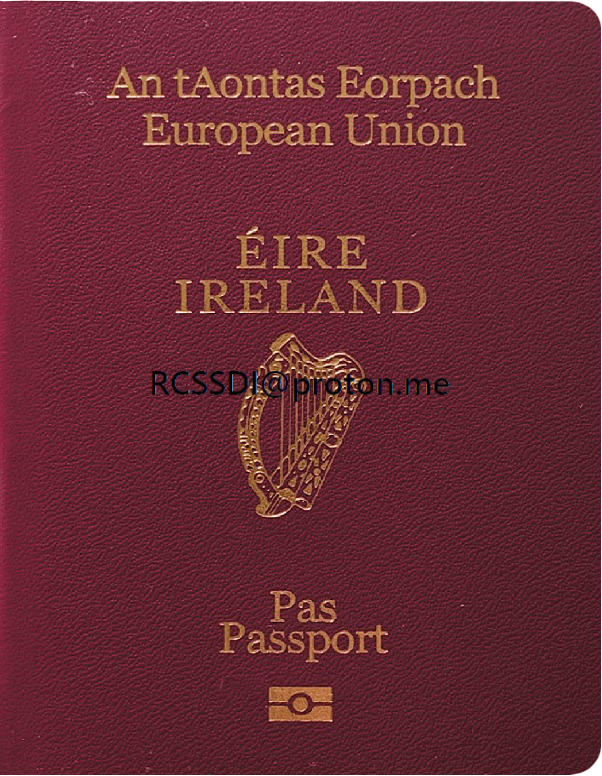
Buy Irish Passport Online with Advanced Security Features: New Identity and International Travel
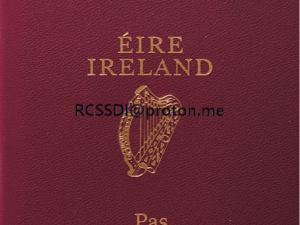
Modern Irish passport online are issued as biometric ePassports, meaning they contain an embedded electronic microchip within the cover of the passport.
This chip securely stores important information about the passport holder including the holder’s name, date of birth, nationality, passport number, and a digital version of the passport photo.
When the passport is scanned at border control, electronic readers can access the chip and verify that the data matches the printed information in the passport. The information stored on the chip is encrypted and protected by digital signatures, making it extremely difficult to alter or duplicate.
Biometric technology significantly increases the security of Irish passports while allowing faster and more reliable identity verification at international borders.
Polycarbonate Identity Page
One of the major upgrades in newer Irish passports is the introduction of a polycarbonate data page. This page contains the passport holder’s personal details and photograph.
Polycarbonate is a highly durable plastic material that allows personal information to be laser-engraved directly into the structure of the page rather than printed on top of it.
Because the information is embedded within multiple layers of the material, attempts to alter or replace the photograph will damage the page and become immediately visible. This technology provides greater protection against tampering and extends the overall lifespan of the passport.
Laser Engraving and Multiple Image Technology
Irish passport online use advanced laser engraving techniques to permanently place the holder’s personal information and photograph into the polycarbonate identity page.
Laser engraving burns the information into the material layer by layer, creating a permanent and highly detailed image. This process prevents the information from being erased or replaced.
In addition to the main photograph, the passport also includes secondary images of the holder’s photo, often referred to as ghost images. These images appear in different areas of the identity page and provide an extra layer of verification for border officials.
Multiple photo images make it significantly more difficult for counterfeiters to replace or manipulate the identity photo.
Ultraviolet Light Security Features
Many pages inside the Irish passport contain special designs that are only visible under ultraviolet (UV) light.
Under normal lighting conditions, these features remain hidden. However, when the passport is examined using a UV lamp, detailed artwork and symbols appear across the pages.
These images may include elements related to Irish culture, landscapes, and national symbols. Because these designs require specialized inks and printing technology, they are extremely difficult to reproduce using ordinary printers.
UV features allow immigration officers to quickly confirm whether a passport is authentic during inspections.
Microprinting for Anti-Counterfeiting
Irish passports include microprinted text, which is extremely small lettering printed in specific areas of the document.
To the naked eye, microprinting often appears as a thin line or decorative pattern. When examined with magnification, however, the text becomes readable.
This technique is widely used in high-security documents because standard printers cannot replicate the fine detail accurately. Counterfeit copies often appear blurry or distorted when compared with genuine microprinted text.
Microprinting provides an additional layer of verification for border control authorities.
Holographic Security Elements
Irish passports also contain several holographic security elements designed to prevent counterfeiting.
These holograms create dynamic visual effects that change when the passport is tilted or viewed from different angles. Some holographic features include reflective shapes, shifting colors, and layered visual patterns.
These optical features are extremely difficult to duplicate without specialized manufacturing equipment. Border officials can easily recognize authentic holographic elements when inspecting passports.
Machine-Readable Zone for Automated Border Control
The Machine-Readable Zone (MRZ) is located at the bottom of the passport identity page. This section contains two lines of coded characters that represent key passport information.
The MRZ includes data such as the passport number, country code, date of birth, and expiration date. Border control systems can quickly scan this zone to retrieve information and compare it with the electronic chip and printed details.
This feature allows automated border control systems to verify passports quickly and efficiently while detecting possible alterations.
Special Security Paper and Printing Techniques
The pages of an Irish passport are printed on specially designed security paper that contains unique fibers and protective features.
These materials may include watermarks, anti-copy patterns, color-shifting inks, and tactile printing that can be felt when touched.
Such features help prevent unauthorized reproduction of the passport using ordinary printing equipment. Attempted forgeries usually fail to replicate these details accurately.
Continuous Updates to Passport Security
Like many countries, Ireland periodically updates its passport design to maintain strong protection against evolving counterfeiting techniques.
These updates may include improved biometric technology, enhanced encryption for the embedded chip, more complex UV artwork and security patterns, and stronger materials for passport pages.
By regularly updating the passport design, Irish authorities ensure that criminals cannot rely on outdated counterfeiting methods.
International Trust in the Irish Passport
The Irish passport is widely respected around the world due to its strong security standards and strict identity verification process during issuance.
Because of this reputation, Irish passport holders benefit from extensive visa-free or visa-on-arrival access to many countries.
The combination of advanced document technology and reliable identity verification procedures makes the Irish passport one of the most trusted travel documents globally.
The Irish passport is a highly advanced travel document designed to protect identity, prevent fraud, and support secure international travel. Through the use of biometric chips, polycarbonate identity pages, laser engraving, holographic elements, ultraviolet security features, and specialized printing techniques, Ireland has created a passport that is extremely difficult to forge or manipulate.
These technologies work together to ensure that Irish citizens can travel internationally with confidence while maintaining the integrity of the country’s identity and border control systems.
As security technologies continue to evolve, Ireland will likely continue improving its passport design to stay ahead of counterfeiting threats and maintain one of the most secure passports in the world.
Reviews
There are no reviews yet.